Bean-to-Bar Craftsmanship: Unlocking Tempering Secrets
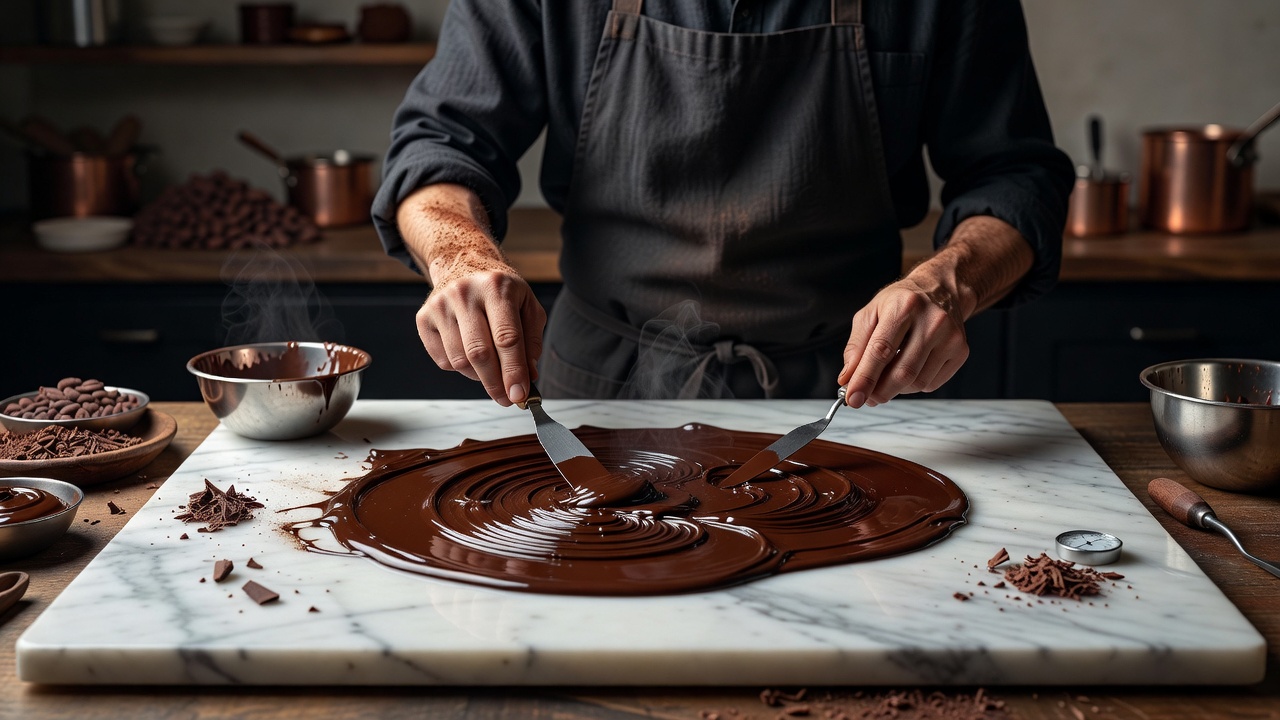
The Magic Behind Crystal Formation
When you bite into a piece of fine artisan chocolate, two sensory cues immediately establish quality: a crisp, resonant "snap" and a smooth, cool melt across the tongue without any graininess or dull white streaks. These qualities are completely dependent on a chemical process known as cocoa butter crystallization.
Cocoa butter is polymorphic, meaning it can solidify into six distinct crystal forms (labeled Form I through Form VI). Only Form V (Beta crystals) yields the satisfying shine, clean snap, and silky texture coveted by master chocolatiers globally.
The Seed Method vs. Tabling
To cultivate Form V crystals, chocolatiers rely on two primary traditional methods during tempering:
- Tabling on Marble: Melted chocolate at 45°C (113°F) is poured onto a cool marble surface and agitated using offset spatulas until it cools to 27°C (80°F), before being gently reheated to 31°C (88°F).
- Seeding: Finely chopped, pre-tempered chocolate chunks are stirred directly into warm melted chocolate to encourage uniform crystal growth.
Why Single-Origin Beans Matter
Just like fine wine, cocoa beans absorb the terroir of their growing region. Beans harvested in Madagascar produce vibrant citrus and raspberry notes, whereas Venezuelan Criollo cocoa delivers subtle nutty, woody undertones. Modern dessert trails prioritize micro-batch chocolatiers who highlight these natural bean nuances without overwhelming them with artificial sugar or fillers.