The Anatomy of a Perfect 81-Layer Butter Croissant
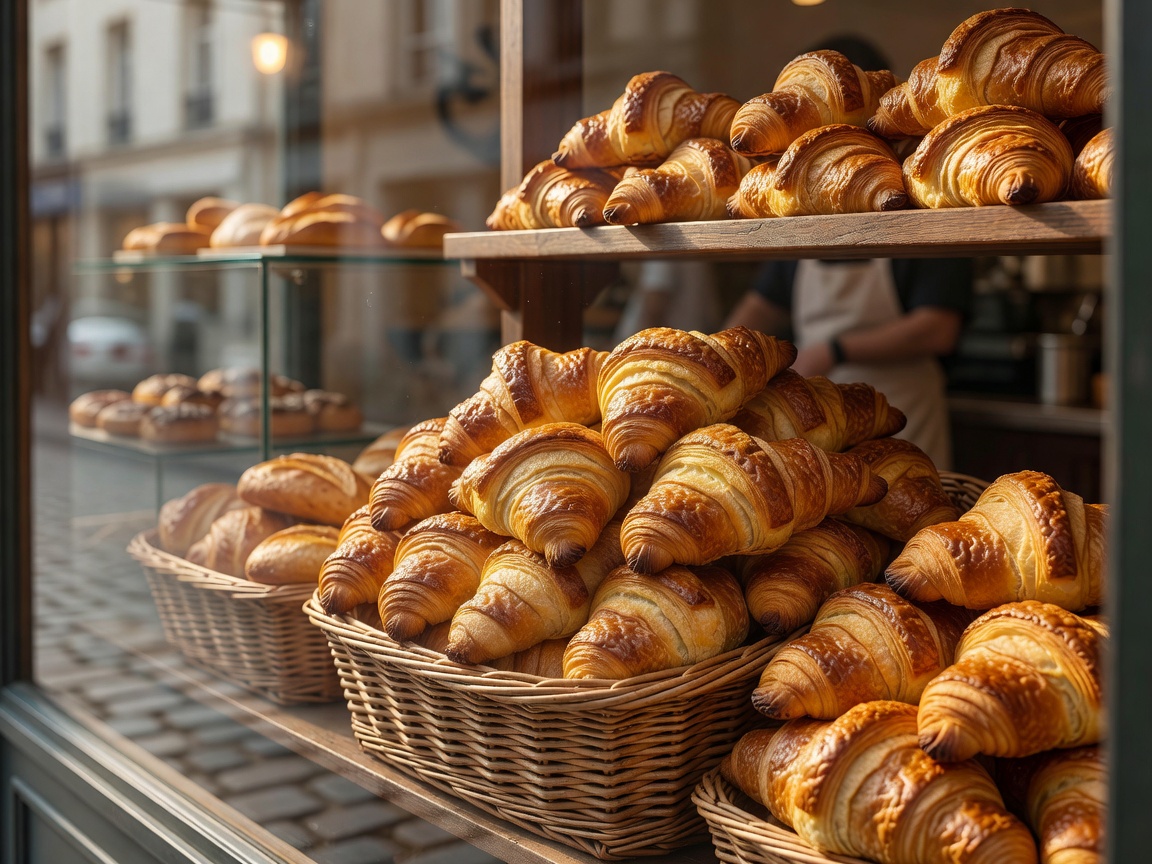
The Physics of Pastry Lamination
A classic French croissant is a masterpiece of thermodynamic baking. The signature honeycomb crumb structure—light, airy, and delicately elastic—is formed through a technique known as lamination, where dough (détrempe) and butter (beurrage) are repeatedly folded into alternating microscopic layers.
When the chilled croissant dough hits a hot deck oven at 190°C (375°F), three simultaneous reactions take place:
- Water Evaporation: Water content within the butter layers turns rapidly to steam, pushing the surrounding gluten sheets upward.
- Fat Absorption: As the butter melts, it fries the thin dough layers from within, imparting crispness and rich flavor.
- Gluten Setting: Starches gelatinize and proteins set, trapping air pockets into an open honeycomb cross-section.
Why Butter Fat Percentage Is Critical
Standard grocery butter contains 80% butterfat and 16-18% water, which can tear the dough during folding. Professional French bakeries exclusively use dry butter (beurre de tourage) with 84% butterfat content. Higher fat content ensures plasticity, allowing the butter to stretch into continuous, unbroken micro-sheets without melting or shattering.
Fermentation & Cold Proofing
True artisanal croissants undergo a 24-hour slow fermentation process at 4°C. Cold proofing allows yeast to develop deep lactic acid flavors without producing harsh alcohol notes, yielding the golden, aromatic butter croissants beloved by pastry connoisseurs worldwide.